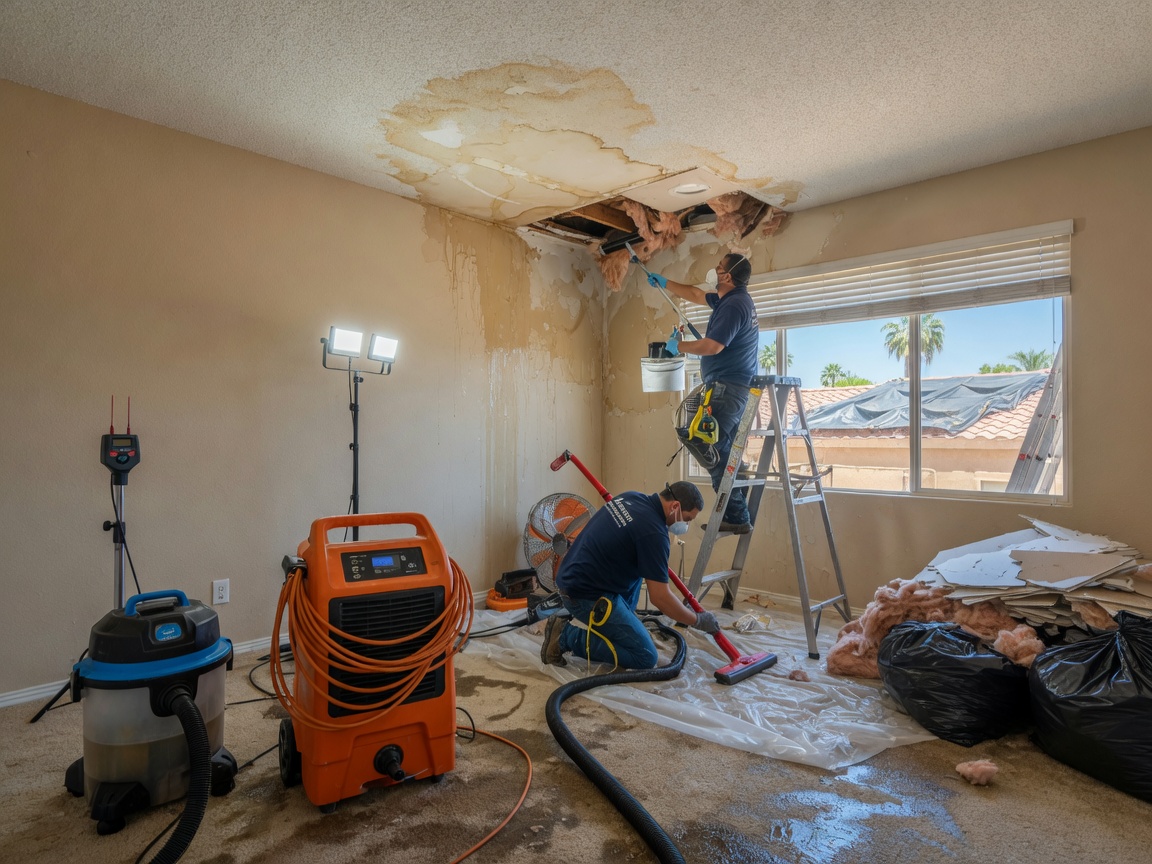
Mesa gets most of its rain in a handful of violent hours between July and September, and a roof that was fine in May finds every weak point at once. Tile that shifted, foam that cracked in the heat, flashing at the parapet, a swamp cooler penetration that was never sealed properly. When the same storm puts water across the ground floor as well, that is monsoon flood cleanup and it is handled differently.
The delay is what catches people. Water enters at the roof deck, tracks along the trusses and drops into the ceiling drywall well away from the entry point. The stain appears two or three days after the storm, which is why so many people tell us the ceiling started leaking on a clear day. We explain the mechanism in why monsoon roof leaks show up days later.
We dry the attic space, the ceiling and any wall the water ran down, and we tell you where the water actually entered so a roofer can fix the right spot. Wet insulation in a 140 degree attic is the fastest mold growth in the Valley, so anything that sat more than a couple of days gets a mold inspection before it is closed up.
Technician insight
Foam roofs on Mesa flat sections need recoating every five years or so, and the storms find the ones that are overdue. If your foam has gone chalky and grey, that is the recoat warning.
Roof Leak Water Cleanup Services We Offer
✓Attic Drying
Wet insulation removed and the deck and framing dried out.
✓Ceiling Cavity Drying
Stained and sagging ceiling drywall dried or removed with the cavity opened.
✓Storm Damage Assessment
Photo and moisture documentation of storm losses for your claim.