2026-08-25T13:57:46.272Z ·
Why Monsoon Roof Leaks Show Up On Your Ceiling Days Later
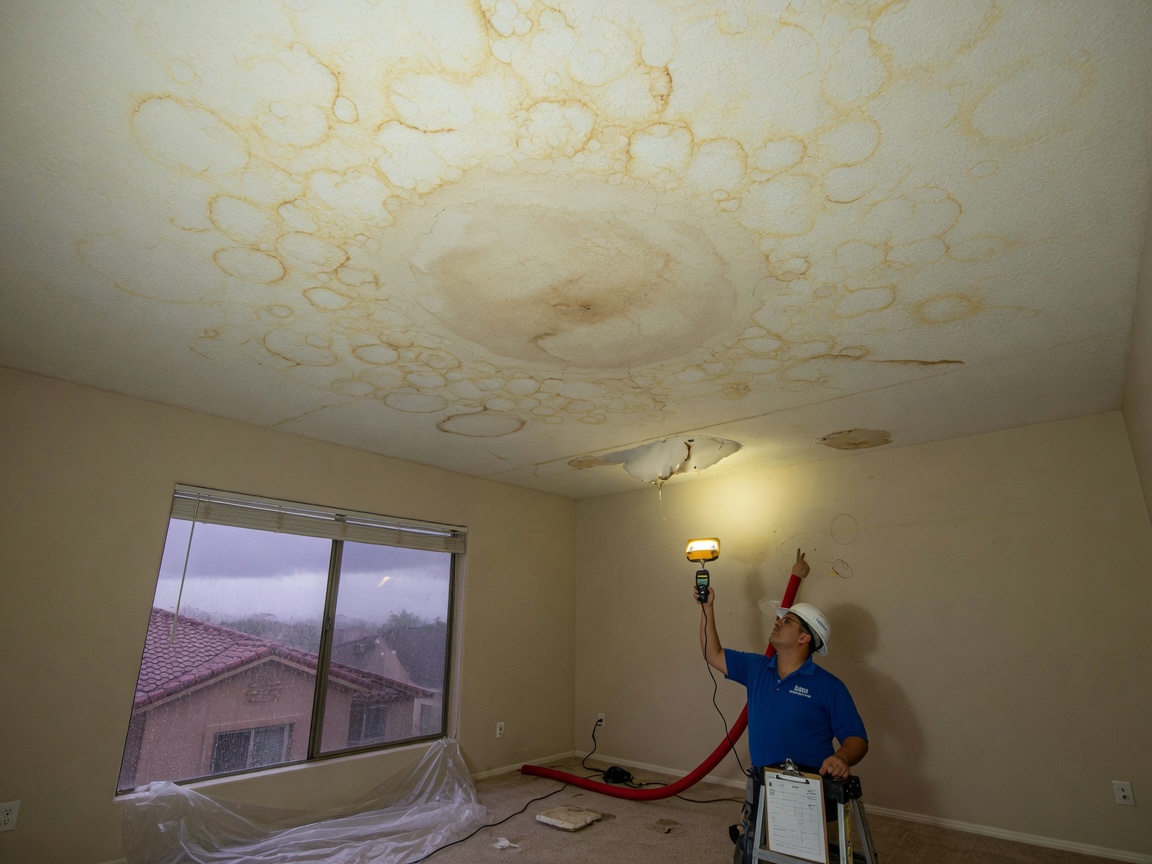
Every August we take calls that start the same way: it has not rained in three days and the ceiling is leaking. The storm was Tuesday, the stain arrived Friday, and it makes no sense to the person looking at it.
Water entering a roof does not fall straight down. It hits the deck, finds the path of least resistance and runs along the top of the ceiling drywall, or down a truss, or across the vapour barrier on top of the insulation. It travels until something stops it, which might be a light fitting box or a drywall seam twenty feet from where it came in. Insulation holds a surprising volume of water and releases it slowly, so the ceiling below gets a slow feed for days after the sky cleared.
That delay is also why finding the entry point by looking at the stain is unreliable. The stain marks where the water finally came out, not where it got in. On a Mesa tile roof the entry is usually a cracked or slipped tile, failed flashing at a wall junction, or an old swamp cooler penetration that was patched rather than properly sealed. On foam roofs it is normally a crack in a coating that has gone past its service life.
What matters right now is the insulation. A ceiling stain that is dry to a meter can be left alone and repainted. A stain over insulation still holding water needs the cavity opened and dried, because wet cellulose or fibreglass against drywall in a hot attic grows mold in a couple of days. Attic temperatures here run well past 140 degrees in the summer, and warm plus wet is the whole recipe, which is why anything that sat gets a mold inspection before the ceiling is closed up.
Not every ceiling stain is the roof. A brown ring near a return vent in July is usually the air conditioner's condensate line rather than the storm, and the two get confused constantly. If the same night also put water across your garage floor, that is monsoon flooding and it is handled as contaminated water.
The practical order: get a meter on the ceiling, dry the cavity if it reads wet, then get a roofer to the actual entry point once someone has traced it. Repairing where the stain is usually means the same leak returns with the next storm. Whether the claim gets paid depends on how the water entered, which we cover in our Arizona insurance guide.
We do the inside half of that, including the tracing. Call (480) 701-8140 and we will tell you on the phone whether it is worth a visit.