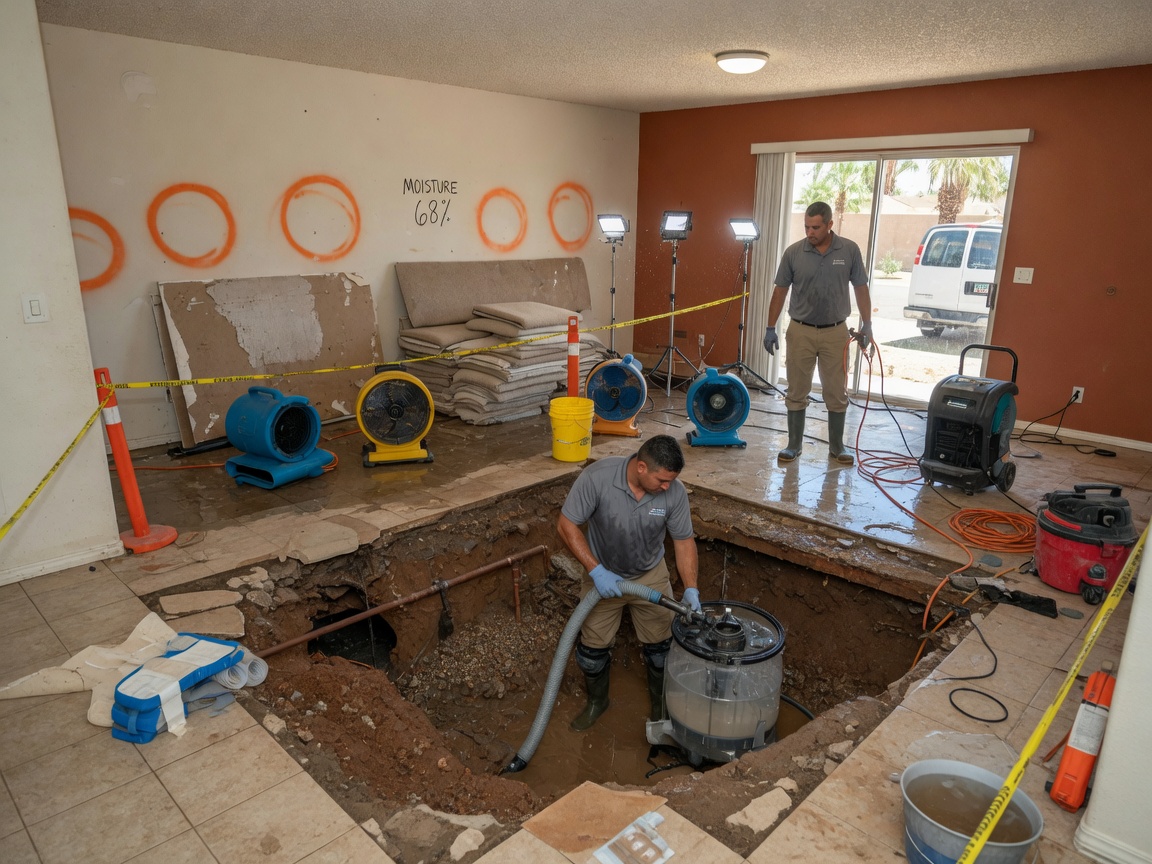
Slab leak cleanup deals with the water, not the pipe. A plumber locates and repairs the line under the concrete. We handle everything that got wet on the way, which is usually more than the homeowner expected. If it has only just started, read what to do in the first hour after a slab leak before you call anyone.
The tell is a warm spot on the tile, a water bill that jumped for no reason, or the sound of running water when every tap is off. By the time you notice, water has been travelling under the floor covering for weeks. Laminate swells at the seams, tile stays looking fine while the thinset holds water underneath, and carpet at the edge of the room reads wet at the tack strip. Weeks of hidden moisture is also why a lot of these jobs need a mold inspection once the floor is open.
Drying a floor system over slab means floating the covering, getting mats down or pulling the affected section, then negative pressure until the concrete releases what it absorbed. It is slower than drying a wall and it is the step that gets cut short most often. Where the pad has gone, extraction and pad removal happen first.
Technician insight
Post-tension slabs are everywhere in Mesa subdivisions built after the mid eighties, and they change how a plumber can repair a leak. Ask which type you have before anyone starts breaking concrete, because a reroute through the attic is often cheaper and less destructive.
Slab Leak Cleanup Services We Offer
✓Post-Repair Drying
Drying the floor system and adjacent walls once the plumber has closed the pipe.
✓Tile and Laminate Water Damage
Assessment of what lifts and what stays, with mat drying under salvageable covering.
✓Concrete Moisture Testing
Slab readings before any new flooring goes down, so the replacement does not fail.